Ahe’hee’ to Mother Earth and Father Sky
Ethyn Hosteen is a first‑year business student at UNM Albuquerque. He grew up in Navajo Reservation, and family and traditions are a big part of who he is. This Thanksgiving story is about prayer, language, and food, the things that make him feel connected and remind him where he comes from.
Thanksgiving at My Great Grandma’s
This year I had just come back home the day before Thanksgiving. I slept in late, finishing up assignments since the semester was almost over, and then rushed to get ready while my mom, dad, and two brothers were already moving around. Luckily, my great grandma doesn’t live too far, so we made it in time. When I walked in, I got to see cousins, uncles, aunties, and grandma. Not everyone made it this year, but the ones who did made it special. They asked how I was doing in college, told me how proud they were that I’m working on my BBA so young, and teased me about whether I’ve gotten a girlfriend yet. I laughed and told them I’m focused on surviving on my own, paying rent, and keeping up with classes.
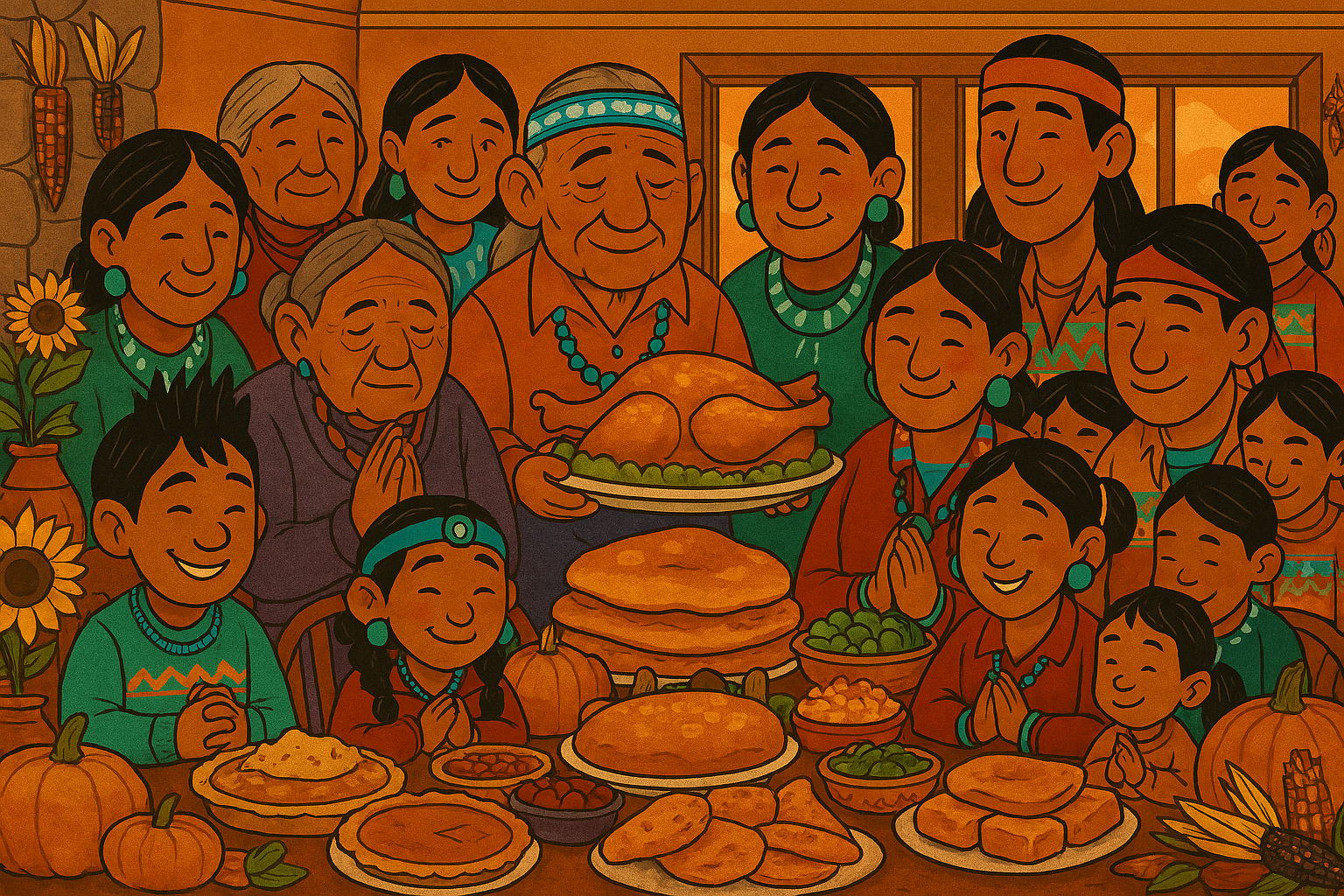
What a Gathering
The Prayer
By the time we finished catching up, the food was ready. But before anyone touched a plate, we all gathered together and went quiet. My great grandma stood up and spoke in Navajo to the older family members. Later, my mom explained the meaning of her words. She began by greeting Mother Earth (Nahasdzáán), because you always start there. Then she acknowledged/greeted father sky (Yádiłhił). From there she called on the Diné (holy people), offering her words to be heard through the four sacred mountains:
Blanca Peak (Sisnaajini) – Eastern Mountain
Mount Taylor (Tsoodzil) – Southern Mountain
San Francisco Peaks (Dook’o’oosłííd) – Western Mountain
Hesperus Peak (Nahookos) – Northern Mountain.
She named the directions one by one, then said she was standing in the middle, giving her offering. Her prayer wasn’t just for herself, she included the whole family, blessing each person “from the bottom of their feet to the top of their heads.” She gave thanks to the water, the fire, and the holy people, offering gratitude for all that sustains life. Finally, she prayed for her own well-being and protection, and for ours too.
The Feast
Afterward, we finally dug in. Turkey, enchiladas, frybread, and yams (my favorite). This year’s Thanksgiving was put together last minute, but usually we go all out, we butcher a sheep and cook it over an open fire, with fresh tortillas made from scratch and green chili grilled right there on the flames. Even though the menu changes, the food always carries the same meaning: it’s about tradition, family, and the comfort of knowing we’re sharing something made with care.
Analysis: Language, Family, and Belonging
What really makes this Thanksgiving stick with me isn’t just the food, it’s the prayer. When my great grandma speaks in Navajo, the whole room goes quiet, and you can feel how important it is. Even though I don’t understand all the words, I know it’s about us, about family, and about being thankful. That moment turns the holiday into something way bigger than just eating together.
The language matters. Starting with Mother Earth, the sky, the holy people, and the four sacred mountains, she ties our family gathering to something spiritual and bigger than ourselves. My mom (shimá), and my fathers mother, (Shinálí) explained it to me later, but even without the translation, hearing Navajo spoken makes me feel connected to where I come from. It’s a reminder that our traditions aren’t written down in books, they’re carried in prayers, in voices, in gatherings like this.
She doesn’t just pray for herself either. She includes all of us, blessing each person “from the bottom of their feet to the top of their heads.” That makes me feel like I belong, even when I’m away at school most of the year. She even gives thanks for the family who couldn’t make it, which shows that being part of this family isn’t just about being in the room, it’s about being remembered.
The conversations before the meal add another layer. My relatives asked about school, told me they were proud, and teased me about relationships. Those moments show how gatherings like this are spaces of encouragement and laughter, where food sets the stage for connection. Then comes the feast. This year we had turkey, enchiladas, frybread, and yams, but usually we butcher a sheep, cook it over an open fire, make tortillas from scratch, and grill green chili. That mix of “traditional” Thanksgiving dishes with Navajo and Southwestern foods shows how our meals blend cultures. It’s a way of keeping heritage alive while also adapting to the moment.
In the end, Thanksgiving in my family is about more than the food. It’s the prayer, the language, the blessings, the teasing, and the mix of dishes that make it what it is. Oral histories like this capture the parts of culture that don’t get written down, the feelings, the rituals, the everyday practices that keep us connected. For me, that single Thanksgiving is a snapshot of American food and family: rooted in Navajo heritage, layered with tradition, and full of meaning that goes way beyond the plate.