Saucy Italians
This story comes from my roommate and bestfriend who is a first generation Italian American. Her father implemented a lot of Italian traditions for their family, but the real tradition came from her “Nonno” and his rigourous chopping methods.
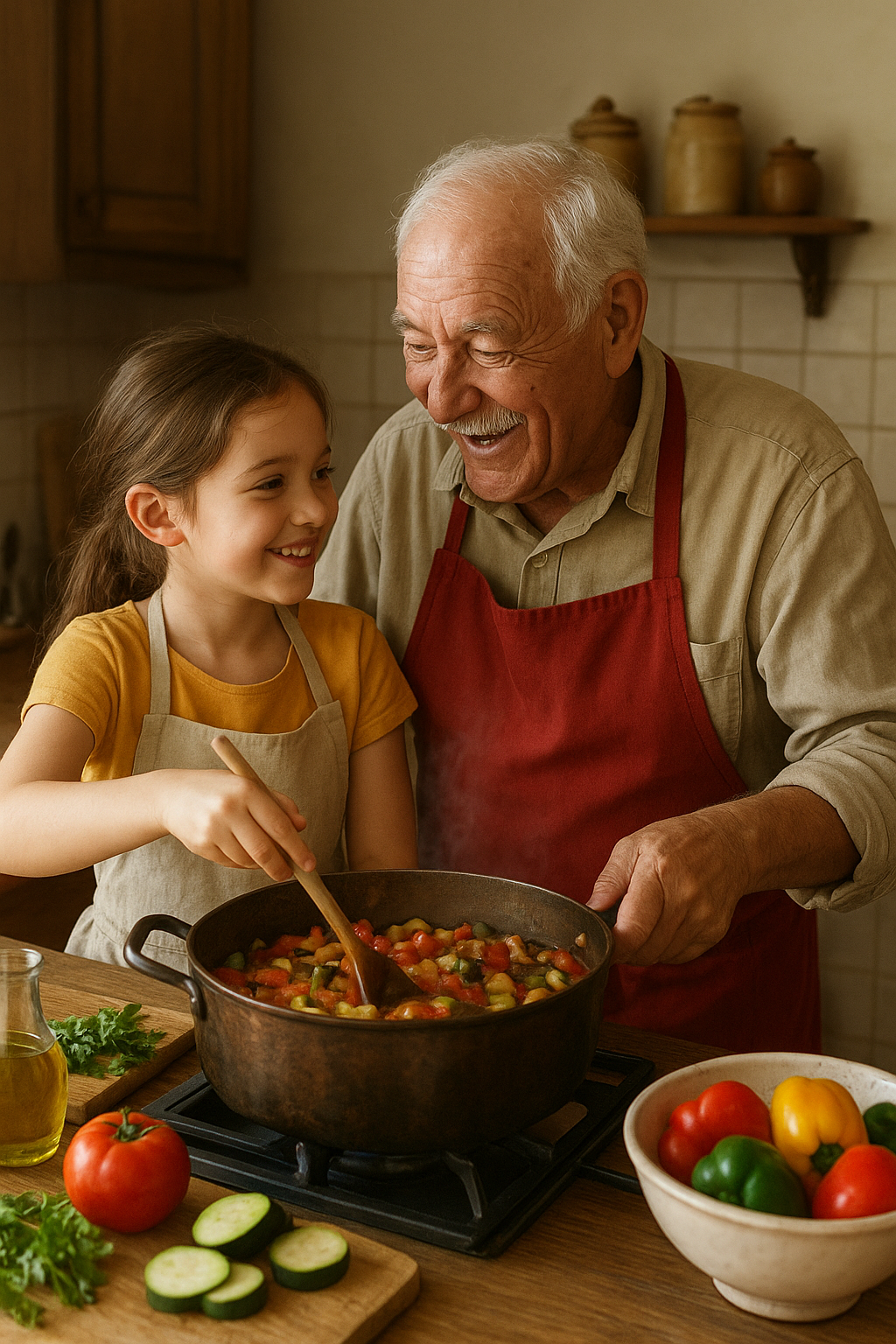
Nonno cooking with his granddaughter
Nonno is Coming to Visit!
Growing up, food was super important to bring her family together. “Nonno” would visit for weeks at a time and during the first days of his vacation, he would spend hours cooking his family-famous sauce that marked the time for celebration. Dania, my bestie, would spend hours chopping and dicing and simmering and enjoying this simple yet flavorful pasta sauce with her “Nonno”. The memories were littered throughout her childhood, up until her beloved “Nonno” passed away, which led to her family resorting to machinery to recreate this delicious sauce. It’s noted that machinery changes the flavor just a tad, which goes to show how important from-scratch cuisine can be in a nostalgic setting.
Chopping, Dicing, and Simmering
When listening to this audio interview, my first thoughts were of my family traditions and how important from-scratch meals are to us. Dania describes the time it took to make this delicate sauce, it involved hours upon hours of chopping and simmering. To a young girl, this may be a bit exaggerated, but I think it is important to keep in mind because of the nostalgia behind the words. The purpose of the meal was to celebrate “Nonno” coming to town, and anyone that knew him would have a place at the dinner table. This food is about tradition and celebration, bringing people together with just a few minced vegetables and handmade pasta.
I think of the use of machinery versus a knife when revisiting this story, especially when Dania noted that it never tasted the same when using a food processor. A direct quote when talking to her after is, “The size of the vegetable chunks really changes the experience”. It was noted that it doesn’t taste the same when using a machine to do all of the dicing as opposed to using the traditional knife and chopping block. This could go into the idea that the food was “made with love”, and how important it is to put the time and energy into the meals we create. Listening to the process of cooking this felt reminiscent of my childhood and how important it was for our family to cook from scratch.
Dania mentions the use of olive oil and garden vegetables throughout this dish, specifically carrots, celery, onions, and garlic. Upon further research of this dish, the name of it translates to “gardener’s sauce”, traditionally using the seasonal vegetables that were in the cook’s garden. The use of fresh ingredients and slow cooking adds to the overall flavor of the dish, with the addition of fresh homemade pasta noodles. Hosting a celebration for the homecoming of “Nonno” creates an atmosphere that only happens once every few months, and adds to the significance of the dish in its entirety. It symbolizes a cultural memory for both Dania and her family, and the importance of keeping tradition alive even when moving to new countries.
The intense ritual of chopping is a major part of this meal and celebration, creating the widely loved flavor that the Defilippis family knows and cherishes. I think that the emphasis on this grueling task adds to the overall tradition that is used when creating this dish. An audio testimony is important for these reasons, you can feel the love that went into the making of this dish just from this short clip from Dania. The admiration and emphasis adds to the overall experience that is in her memory forever. Tradition is rooted as deep as the carrots that were used, and this dish will live on into new generations of the Defilippis family.