Home Is Where The Food Is
This story comes from Michelle Dombrowski, who grew up in Milwaukee, Wisconsin, where summer is king and all the foods that go along with it.
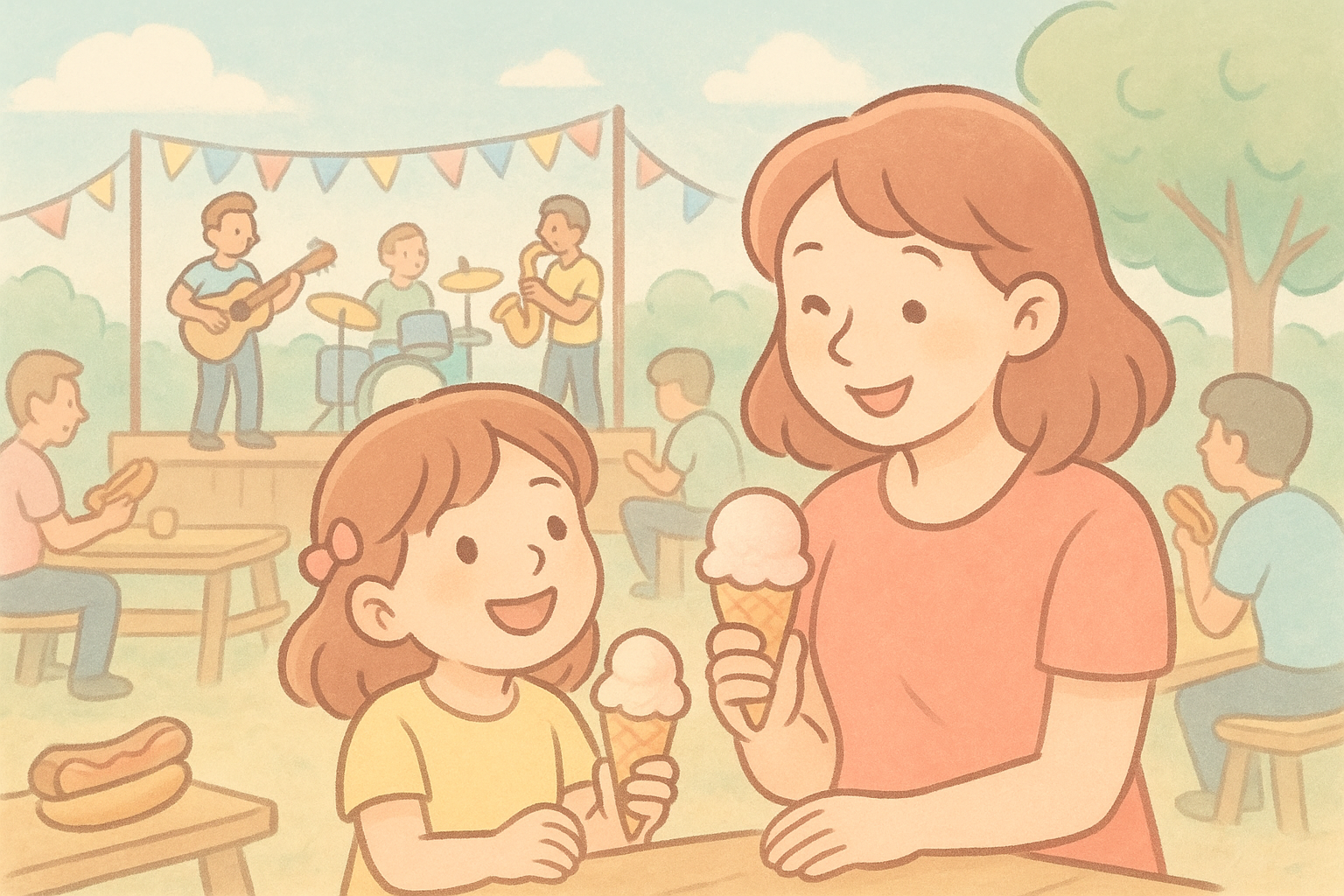
Food, Fun, and Summer
Summer Food and Festivities
Summer in Wisconsin was never just about weather. It was a change in rhythm, mood, and most of all, in the foods that defined her childhood. The arrival of warm days meant festivals, family gatherings, and traditions that revolved around simple but meaningful meals. She never knew the food traditions she grew up with were so regional, until she moved away and realized how much they meant to her. She learned how these traditions were instrumental in forming who she is today.
Analysis: Community, Culture, and Custard!
This story about Wisconsin summer food traditions reveals far more than just nostalgic memories; it functions as a window into how identity, heritage, and community are constructed in everyday American life. The foods described; frozen custard, bratwurst, and cheese, are not simply regional specialties but symbols of belonging, authenticity, and cultural inheritance. This narrative shows how American cuisine is actually a fusion of immigrant traditions and local adaptations that become deeply personal.
One central theme is heritage, particularly the understated but pervasive German influence in Milwaukee. What is interesting is that the narrator never explicitly frames her childhood as “German American,” yet the foods and spaces she associates with comfort and identity are tied directly to the deeply rooted German immigrant culture of Wisconsin. This reflects a broader pattern in American cuisine: immigrant foodways becoming adopted to the point that people see them as simply normal or local, and not “ethnic.” Frozen custard stands, bratwursts soaked in beer, and church festivals, are all German traditions reshaped in an American context, but the story shows how seamlessly they integrate into a regional identity. Heritage becomes lived rather than declared.
Community is another major layer. Food consistently acts as the medium through which relationships are maintained such as family outings to Kopps, mother-child bonding at church festivals, and Sundays with grandparents. These personal experiences demonstrate a very American cultural assumption: food is not only nourishment but a tool for togetherness. Even the detail that Kopps had no tables, “everyone standing or sitting outside together” suggests that the lack of formality becomes part of the community experience.
The story also reveals assumptions about authenticity in American food culture. Frozen custard must be eaten immediately, “served fresh, as it’s made.” This emphasis on immediacy aligns with larger American food narratives that romanticize artisanal, “real,” or handcrafted foods, even when consumed in casual settings. The way the narrator describes watching the custard come out of the machine and transforming a simple dessert into a “purest delicacy” shows how authenticity is constructed through process as much as taste. The experience becomes ritualized, and that ritual produces meaning which then forms into authenticity.
The theme of economy also surfaces. The narrator mentions that her family “didn’t always have a lot of money,” yet inexpensive foods still created joy and stability. Her grandmother’s stale crackers indicate frugality, but do not take away from the experience. A bratwurst at a church festival is affordable, but symbolically it becomes much more: a weekly tradition, an entry ticket into communal life, a taste tied to childhood.
Identity shows up in this story on multiple levels. At the individual level, foods like cheese or frozen custard shape self-understanding (“You can’t grow up in Wisconsin without loving cheese”). At the regional level, Wisconsin identity is defined through its dairy, sausages, beer culture, and summer festivals. And at the national level, this narrative reflects a key aspect of American cuisine: it is regional, rooted in immigrant histories, and built from local pride rather than a single unified tradition. These memories reinforce the idea that American identity is often produced through regional food landscapes.
Overall, this story illustrates that American cuisine is not homogeneous but grown from centuries of immigrant influence, community ritual, and belonging. Food becomes a cultural language through which identity, history, and belonging are expressed, especially in the places we call home.