Friendsgiving and its Meaning
This story comes from Jesse Alvidrez, who grew up in Taos and is currently attending the University of New Mexico. When he moved to Albuquerque, he knew the importance of finding a new community of friends to be around, and this in turn introduced him to friendsgiving and it’s meanings to him.
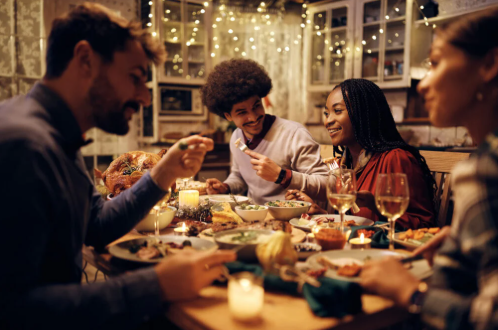
A Friendsgiving Event
Something more specific
He always saw thanksgiving and other various food traditions from a very food-centric perspective, but Friendsgiving made him realize that gatherings and the sense of community is more than just about food. The individual narrates his experience with previous thanksgiving events with family and his experience making apple pie, but when he began to become more familiar with friendsgiving, his perspective about preparing food for these events became more than just about the food itself.
Analysis: Family, Friends, and the Meaning of Gatherings
The story of moving from traditional Thanksgiving to Friendsgiving shows an important shift in how people understand food-centered gatherings within food culture. For many years, the narrator believed that Thanksgiving was mainly about the food, especially the pressure to make a great apple pie to impress others. This mindset reflects the idea that what we bring to the table, literally and symbolically, says something about who we are. Cooking becomes a way to prove effort, skill, or maturity. But through several years of celebrating Friendsgiving in college, the narrator realizes that the real meaning of these holidays has always been about connection rather than impressive dishes. The narrator’s desire to make an impressive apple pie highlights how food can shape identity. The act of cooking or baking becomes tied to the fear of judgment, the desire for approval, and the belief that participating “correctly” in a holiday means performing well. This kind of pressure is common in many food traditions, where certain dishes are viewed as tests of family loyalty, cultural knowledge, or personal competence. In this case, the narrator’s apple pie isn’t just dessert; it becomes a symbol of wanting to belong.
Friendsgiving introduces a different perspective. Instead of a long list of expectations or traditions, Friendsgiving is often more relaxed, flexible, and shaped by the people who show up. There is usually less pressure to follow a family recipe or impress anyone. This makes the narrator realize that the joy of gathering wasn’t ever about the apple pie itself; it was about the relationships being formed or strengthened by sharing a meal with those close to them. This experience raises a deeper question about authenticity. In traditional American holidays, authenticity is often tied to doing things “the right way,” meaning the way your family or community has always done them. But Friendsgiving challenges that idea. Of course, there will usually be a meal a friend brings where they claim it’s authentic to their culture, but nothing about Friendsgiving is “traditional” in a historical sense, yet it still feels meaningful and real. The authenticity comes from the emotions involved in being able to spend time with your closest friends.
The story also says something about how people grow into their own identities when they move away from home. In childhood, it may be easy to miss the true purpose of a holiday. The narrator used to focus so much on performing the role of a “good family member” that they overlooked what their family truly valued about Thanksgiving. Ironically, it took celebrating with friends, outside the family setting, to understand what their family gatherings meant all along. The realization that Thanksgiving has always been about being together shows how food carries emotional meaning that is not always obvious until we step outside our routines. Another important theme is how American food traditions change over time. Many young adults create their own versions of holidays because the old ones may feel stressful. Friendsgiving reflects a growing cultural trend, such as taking the heart of a tradition, like gratitude and community, and reshaping it into something more inclusive and less demanding. By removing the pressure to perform, they were finally able to see what mattered most, connection, not presentation.
In the end, the narrator discovers that the apple pie was never the center of Thanksgiving. It was just one part of a much bigger picture. The true meaning of the holiday, whether celebrated with family or friends, is within the shared experience and the sense of belonging that comes from being together. Through Friendsgiving, the narrator rediscovers what Thanksgiving was always trying to teach, that food brings people to the table, but the people are what make the meal meaningful.