Introduction
This story comes from David Cooper, who grew up in Las Cruces, New Mexico, but always loved the rolls his Grandma, who lived in Columbia, Missouri, would make every Christmas when they would visit.
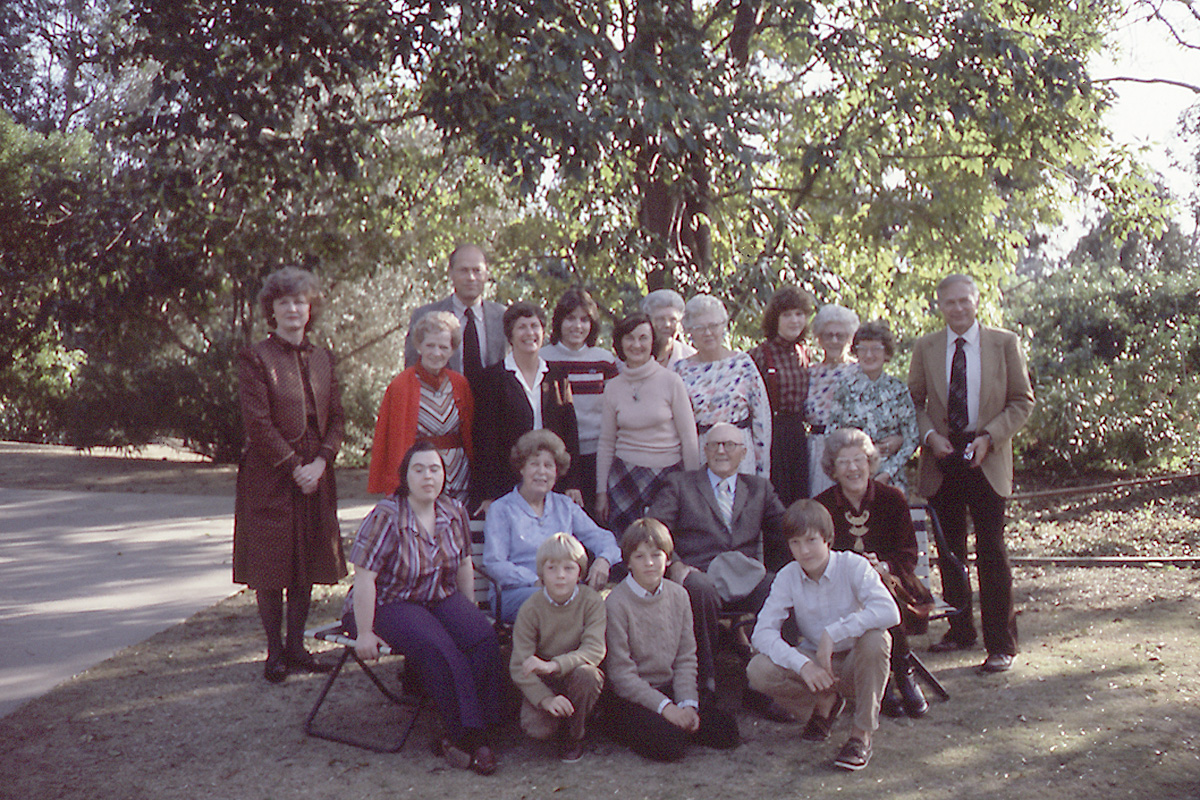
My Grandma’s Extended Family
Sweden to the Southwest
My maternal grandmother lived in Columbia, Missouri, which we would visit every Christmas to see my extended family. Her last name was ‘Lindgren’, and her dad’s family had immigrated from Gothenburg, Sweden. The rolls she would always cook during Christmas time were one of my family traditions, and one that my mom now cooks for Thanksgiving and Christmas, in homage of my grandma who passed away in March 2018.
Analysis: A Nation of Immigrants
The story of my Grandma and her rolls follow two common patterns of American food culture - immigration and tradition. Immigration is critical to the story of America, and its food culture is no different. Her dad’s family was from Sweden, and immigrated some time during the 1800s, of which there were tens of millions who made the similar decision.
But this story speaks more to the nebulous and vague nature of tradition and how it is passed down. Throughout this class, we have talked about cookbooks, particularly how they are imperfect and do not reflect the past perfectly, but also that tradition is not often well-documented. My familial food traditions are not well-documented, and these traditions I do follow were created within only a couple generations of me. These histories, if they ever were documented before, were likely lost as they were almost entirely oral histories.
Most likely, the food traditions of my great-great-grandparents were very different from what they had access to when they moved to the United States. To the greatest extent of knowledge, they settled somewhere in Iowa, which is where both of my maternal grandparents’ families were from. The food expectations and norms of middle America were almost certainly different from the food traditions of the coastal Gothenburg, Sweden.
As we discussed at the end of the class, invented traditions are a major aspect of American food culture. These rolls are one of many thousands of examples throughout the country of invented food traditions. Likely in part due to how a vast majority of Americans are descendants of immigrants within only the last few hundred years. Unlike most of the countries of the Old World, where people can track their family traditions to a localized area, most people of the New World (with the exception of Native Americans) do not have that history to their traditions.
There is also a difference in cultural desires to be close to one’s roots, however close one can actually be considering that authenticity is itself a nebulous concept. But there may have been less of a desire to be connected to Sweden compared to other immigrants for a series of reasons. For one, in the late nineteenth and early twentieth centuries, there was an expectation that immigrants would abandon their traditions, or at least minimize them to fit into the mass culture. This took particular precedence around the time of World War I, but I don’t have personal knowledge as to how this development of distance from Sweden came around. There was also a certain racial aspect to it, as for immigrants from Sweden, they likely did not struggle to fit in purely from their physical attributes, and assimilation was their easiest pathway to seamlessly entering American culture. For people who may have been of Chinese or African descent, for example, the racism of the time couldn’t be avoided. Likely seeing how difficult it was for immigrants, it may have been partially out of practicality that they quickly assimilated to the mass American culture.