Appalachian Pickled Corn
This story comes from Sandy Woods, my grandma. She grew up in West Verginia on the family farm which they later sold to by a small grocery store. She moved away from West Verginia to go to college and became a high school math teacher. She is now retired and lives in New Mexico.
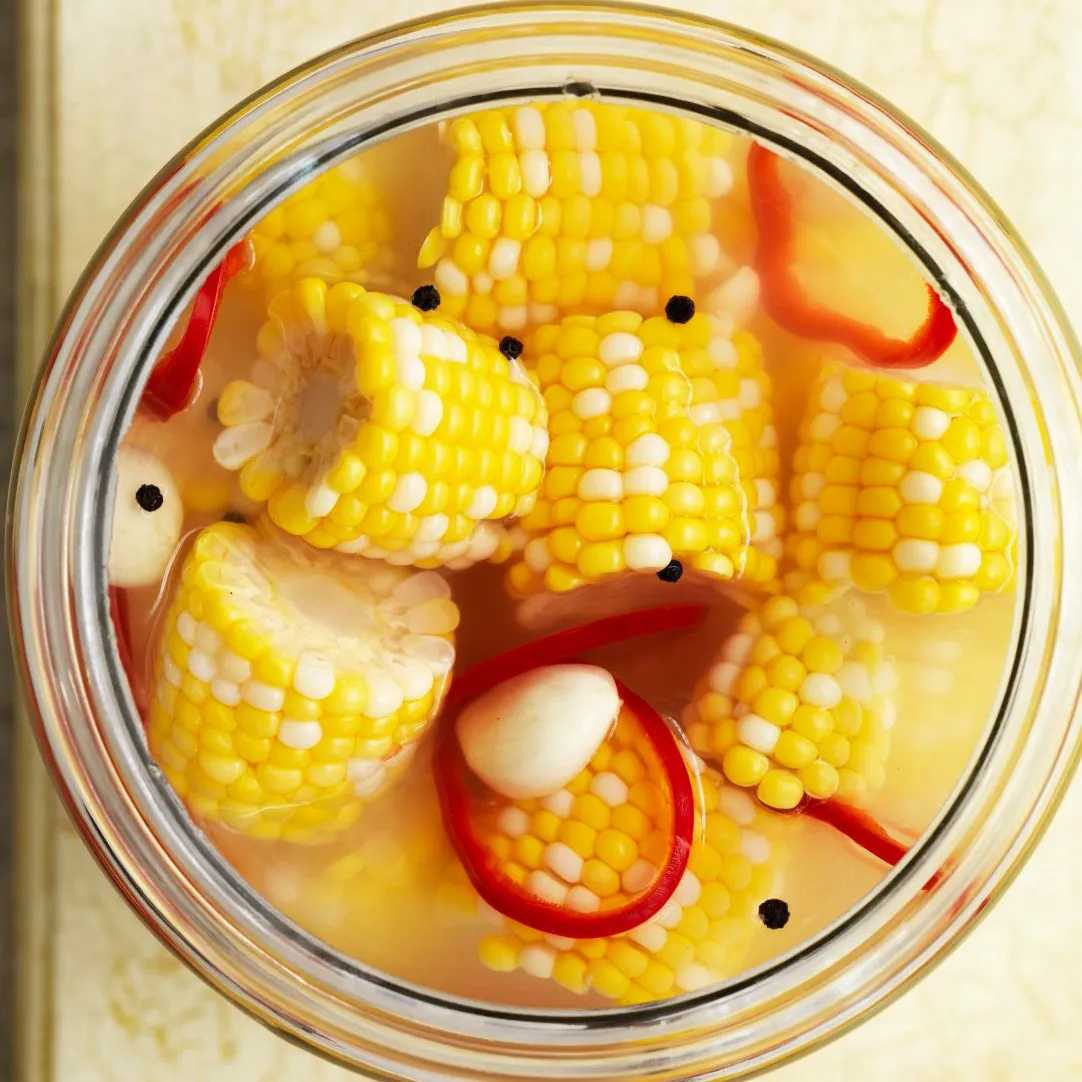
A Tangy and Tasty Treat
Why Pickled Corn?
My gran was excited to tell me this story. During this interview I could feel the nostalgia for her childhood on the farm in West Verginia. She talks about some of the methods they used to preserve the food they produced other than pickled corn as well, like salted ham and pickled cabbage, but the one she was most excited to talk about was pickled corn. It was obvious to me that this is something that she misses and was excited to share the memory of.
Analysis: Lost Traditions and Relationship to Food
This story is about some of the food preservation methods that Sandy and her family used when she was growing up on the family farm. When listening to my gran tell this story I noticed a lot of nostalgia for these old food ways. This follows a general trend that I see when she tells stories of nostalgia and especially missing West Verginia. This is interesting as, based on my understanding, my grandparents are much more prosperous and successful now than they were when they lived in West Verginia. Yet despite this success there is a longing for these old ways of pickled whole corn and salted ham. Perhaps it is a longing for the connection to the food that is missed. As someone who has never experienced that level of connection to my food, it is something I long for when I think about how strange my relationship is to the food I consume. I would bet that feeling must be even stronger for someone who used to experience that connection to their food like my Gran used to. I think this story is an interesting look into how quickly the foodways of people in America have changed in recent history. Pickled corn is something that I have never had. Especially not homemade picked whole corn cobs. I doubt that many people, especially those younger than my grandparents, have. It is bizarre that something so fondly remembered by my grandmother, and presumably eaten several generations before her, can be so foreign to me. In this interview I asked my Gran why she doesn’t make these things anymore. Aside from not having a cellar she makes the assumption that the kids wouldn’t like it. I assume she means kids referring to my younger cousins. I wonder still why this is an assumption she makes. My best guess is that she believes that because of the progress and availability in the modern world that interest in something “old” like the methods of preservation she used as a kid would be nonexistent. However, I see the opposite. One of my cousins recently was experimenting with making hand ground corn tortilla as close to the old ways as he could. I see a craving for this kind of traditional food ways all over including in myself. Is it because we want tradition or is it more just that we want more connection to our food? How is it that those of us who have not really experienced more connection to where our food comes from also have such a stone desire for it as someone like Sandy who grew up with the experience? It’s not just nostalgia; there is a wrongness with the way we consume. Even if we don’t recognize it, it affects us.